
Manual product research is extremely important for Amazon affiliate marketing because the real success of your marketing strategy and overall sales performance largely depends on it. To help you get started, below is a simple and complete breakdown of the key factors you should carefully analyze during the product research process.
All these strategies are based on my real-world testing and practical results from over a decade of hard work in Amazon affiliate marketing, and they can help you choose products that are more likely to generate consistent sales.
For Free Training and Support: Join Our Social Platforms
Facebook Page: Sarkar State Official Facebook Page
Facebook Group: Sarkar State – Official Facebook Group
YouTube Channel: Sarkar State – Official YouTube Channel
Want to Start Amazon Affiliate Marketing? Join My Step-by-Step Course: Amazon Affiliate Marketing Course
Initial Preparation Before Product Research
Before starting your product research, there are several important preparation steps you should complete first.
P-1. Use Only Amazon.com
Always use https://www.amazon.com/ for product selection and research because it represents the U.S. marketplace, which is the primary and most profitable target market for Amazon affiliate marketing. Never use country-specific stores like https://www.amazon.in/, .ca, or .uk, even by mistake, as they target different regions with separate audiences, pricing, and buying behavior.
P-2. Create a Basic Amazon Account
To conduct proper product research, you should first create a basic Amazon account. This does not mean an Amazon Affiliate or Associates account. Instead, it refers to a regular Amazon customer account that people commonly use for shopping on Amazon.
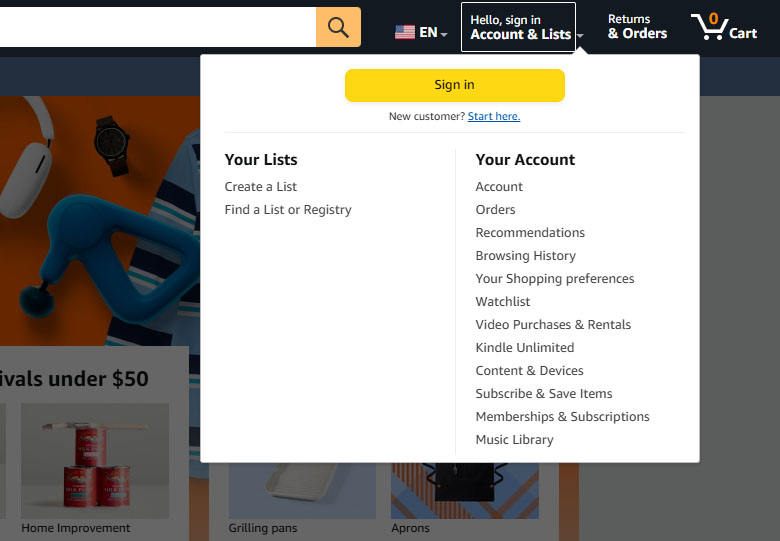
In most cases, you can create the account using just an email address and password. However, some users may also be asked to verify a phone number during the registration process. Sometimes Bangladeshi phone numbers work successfully, while in other cases Amazon may not accept them.
P-3. Add a U.S. ZIP Code
After creating your Amazon account, you should set a U.S. ZIP code to make Amazon display products, pricing, and availability based on the United States market. You can find this option near the top-left section of Amazon, directly beside the logo, where it says “Deliver to.”

Click on that section and enter a U.S. ZIP code. One of my preferred ZIP codes is 90001, which belongs to Los Angeles County, California.
P-4. Amazon Search Box Setting
Now look at the search box on Amazon. On the left side, you will see an option labeled “All,” which is used to select product categories. For product research purposes, you should always keep it set to “All.”
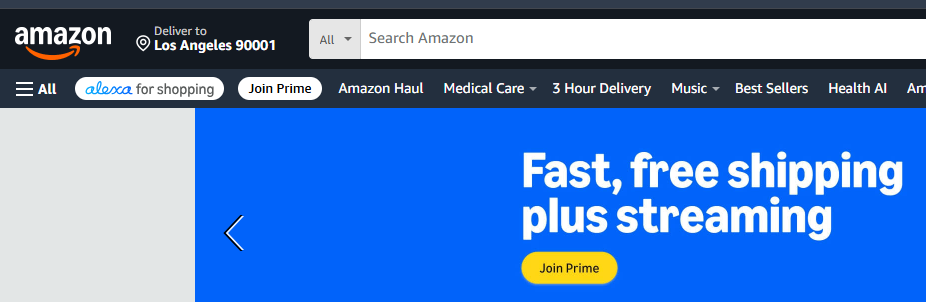
No matter which type of product you are researching, avoid selecting any specific category. Keeping it on “All” ensures you get a wider range of results and do not miss potentially profitable products across different categories.
P-5. Search Product Without Using “Best”
After selecting your keyword/product, type it into the Amazon search box and start searching. Always remember that removing the word “best” from your main keyword or product often yields more accurate and realistic results.
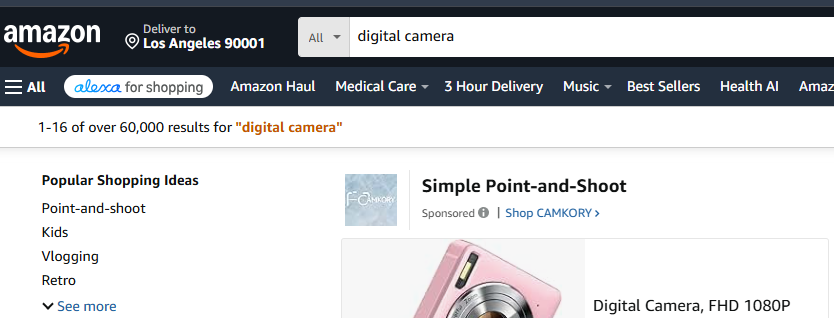
For example, if your keyword is “best digital camera,” you should search only “digital camera.” This approach helps you discover a wider range of products, improves result quality, and gives you a more natural view of what customers are actually buying.
My Hidden and Proven Tricks for Amazon Affiliate Product Research
With more than a decade of experience in Amazon affiliate marketing, I will now share some hidden yet proven tricks that can significantly improve your conversion rate. These strategies are based on real-world
Trick–1. Understanding Deep Down Niches and Product Research Sources
Within every niche, there are multiple deep-down sub-niches, and building a clear understanding of these segments is essential before starting product research. If you rely only on Amazon search results, there is a high chance of making incorrect product selections, as mentioned earlier.
For a better initial understanding, you should start with Google and Bing searches. After searching, switch to the image tab to get a clear visual overview of the product and how it is used in real life. This helps you quickly understand the product type and its variations.
If you need deeper insights that are not clear from images, you can directly use ChatGPT voice chat. This allows you to get fast, detailed explanations and clarifications in a more interactive way. In addition, you can also check Google AI Overviews to gather quick, summarized information about the product and its market context.
For example –
While I already had some knowledge about tripods and selfie sticks, I knew very little about monopods. So, I asked ChatGPT how a monopod differs from the other two, and through voice chat, it explained everything to me in a very clear and engaging way.
Trick–2. Keyword Relevant Product
The product should not only be high quality but also closely match the keyword intent. Even if Amazon shows good products in the search results, they may not always be the right fit for the keyword. That’s why it’s important to first build a clear understanding of the product before starting your research.
For example, if you search for monopods on Amazon, you’ll also come across tripods and selfie sticks. However, you need to carefully filter through the results and select only the monopods from the rest.
Trick–3. Avoid Amazon’s Default Product Filters
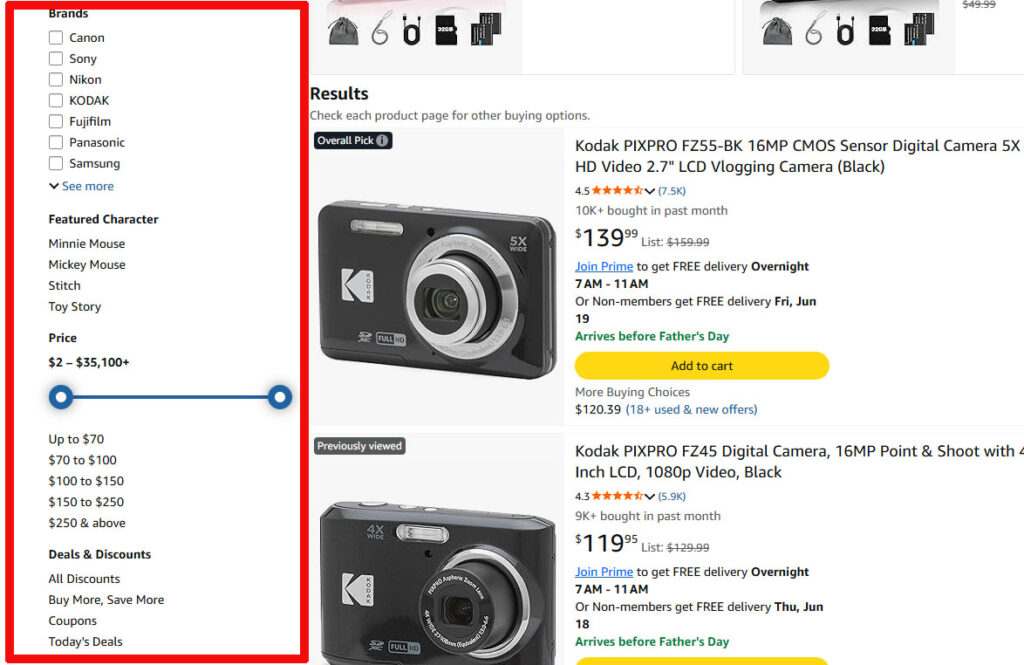
When you search for products on Amazon, you will see a default filter system on the left side of the results page. Unless there is a very specific need, you should avoid using these filters during product research.
The reason is that these filters are not always 100% accurate and may unintentionally remove potentially profitable products from your search results. As a result, you could miss out on high-quality products that might perform well in your affiliate marketing strategy.
Keyword example where I really need to use Amazon’s filtering system.
Best Copper Cookware: When searching for products for this keyword without applying any filters, I came across a large number of products that appeared to be made from fake or low-quality copper. To narrow down the results and find more relevant products, I applied the Copper filter from the left-hand sidebar. This helped me find better and more relevant products than the initial search results.
Trick–4. Bought in Past Month Statistics
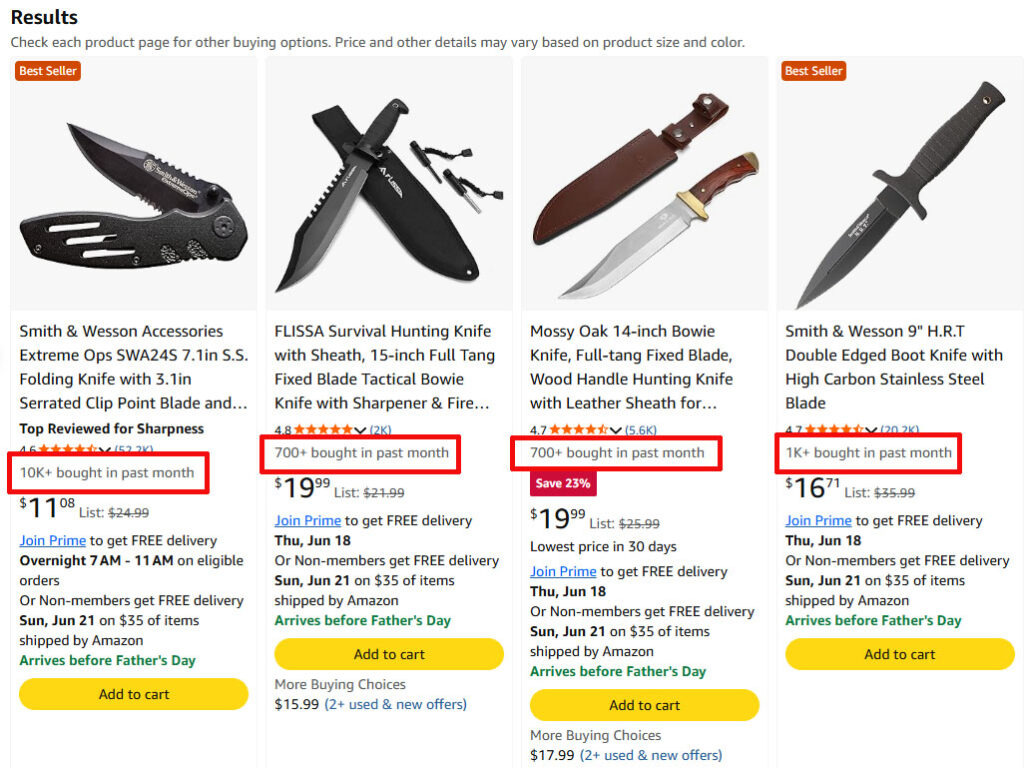
Next, you have to find the best-selling products on Amazon according to your specific post or keyword.
By “best-selling,” I mean products that show the strongest “Bought in Past Month” numbers for your target keyword on Amazon.
One of the most important factors in product selection is checking how many units of a product have been sold in the last month (Bought in Past Month) at its average price range. This gives you a clear idea of real demand and market performance.
However, this data is not always visible if you are not logged into a basic Amazon account. Without an active account, you may miss this crucial “Bought in Past Month” information, which is essential for evaluating product viability and making informed decisions.
However, do not focus only on sales volume. The product price should also stay within a balanced range, not too cheap and not overly expensive.
Note: You will come across many keywords where important information such as Bought in Past Month is not available during product research. In such cases, prioritize the number of product reviews. If a product has few or no reviews, prioritize product variations and their stock availability.
Trick–5. Product Pricing Strategy
When selecting products, it is important to keep the price close to the average market range.
For example, if your niche mainly targets products priced between $30 and $150, the ideal average range would usually be around $40 to $80. Avoid choosing products under $20 whenever possible, even if their sales numbers look high, because the affiliate commission is usually too low.
On the other hand, products priced above $100 often generate fewer sales, which can reduce overall conversion potential. The goal is to find products with a healthy balance between sales volume, conversion rate, and commission value.
However, in rare cases, if a higher-priced product still shows strong and consistent sales performance, it can be considered a good option. These types of products are uncommon, so careful evaluation is necessary before making a decision.
Also, look for newer products that are currently selling well. In many cases, newly trending products with strong “Bought in Past Month” numbers can outperform older recommendations and attract more clicks and conversions.
Trick-6. Product Rating Criteria
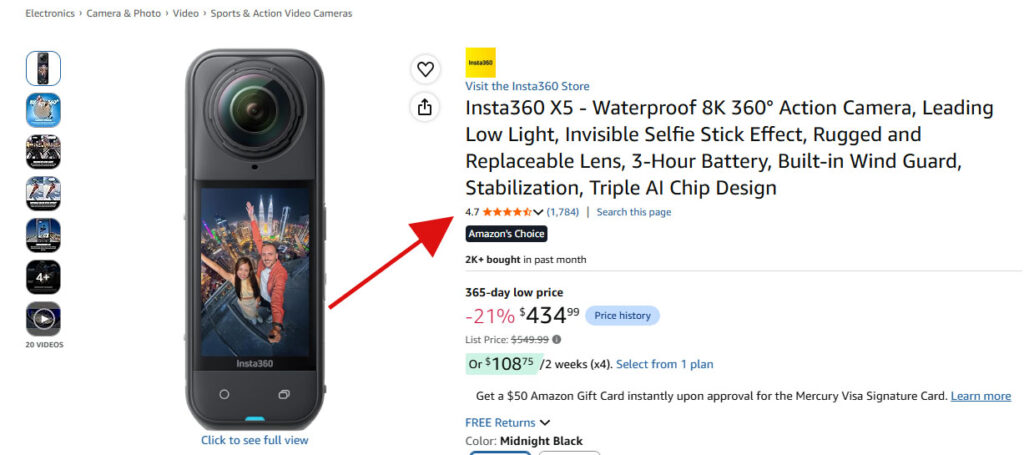
If the average product rating for your target keyword is below 4.5, it is generally better to avoid that product. A higher rating usually indicates better customer satisfaction, which can positively impact conversions.
However, there are exceptions. In some cases, certain keywords may have very limited product options on Amazon, and the available products may have ratings below 4.5. In such situations, you can still consider those products if there are no strong alternatives and the niche shows demand.
Trick–7. Product Review Count
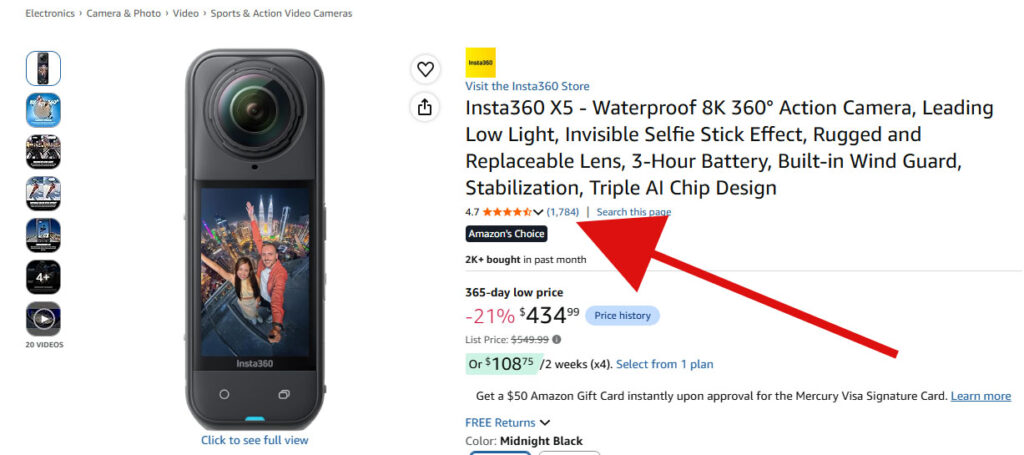
The higher the number of reviews a product has, the more reliable it is considered. A strong review count usually indicates that the product has been tested by a large number of customers, which reduces the chances of making a wrong selection.
In addition, the number of reviews can also give you an idea of how long a product has been on the market and how long it may continue to perform well in the future. This can often be estimated by analyzing its review growth and overall sales consistency.
If two products have similar overall sales performance, rating, and price structure, you should generally choose the one with a higher number of reviews, as it indicates stronger trust and market validation.
Trick–8. Product Stock Status
In most cases, well-selling products maintain stable stock levels. However, there are situations where even high-performing products may temporarily run low on inventory.
If you find a product with low stock availability, it is generally better to avoid it. Low stock can lead to missed sales opportunities, inconsistent availability, and reduced reliability in your product selection process. Choosing consistently available products ensures more stable performance in your affiliate marketing strategy.
Trick–9. Product Brand Consideration
Some new Amazon FBA brands may launch only one or two products, and sometimes these products show strong “Bought in Past Month” sales performance. While these products can look attractive, extra caution is necessary when selecting them.
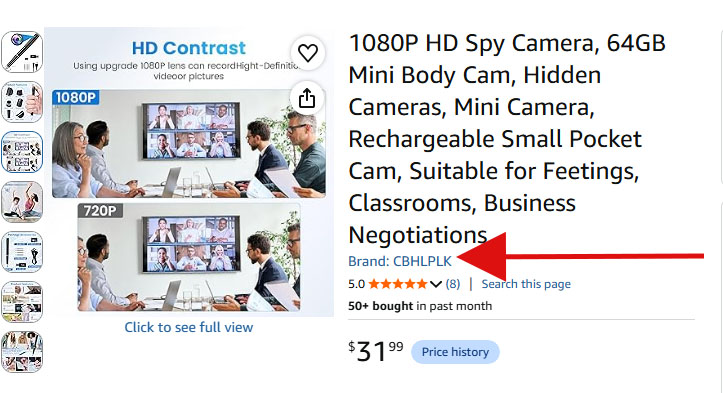
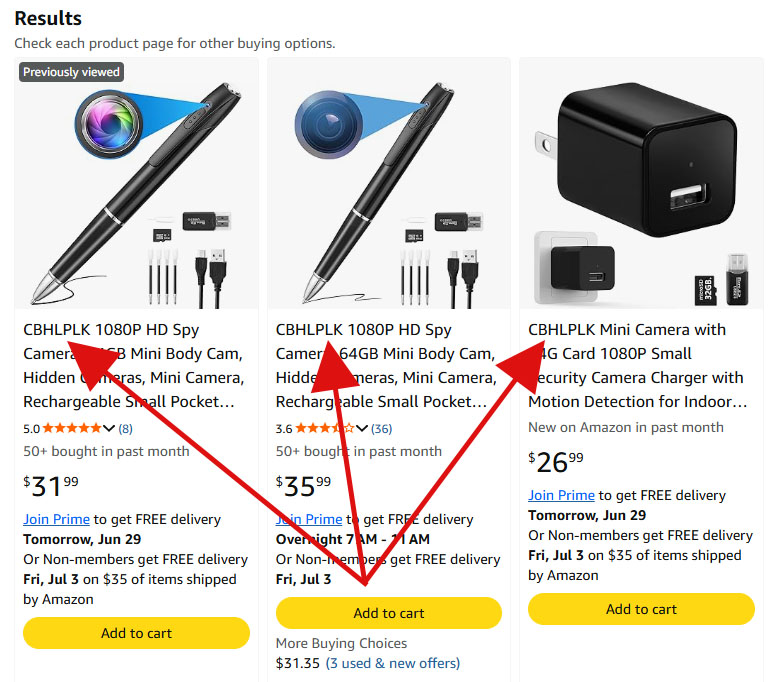
You should avoid placing such new or unproven brands within the top positions of your main product selection, especially in the top three of the top 10 list. The reason is that many of these brands may stop operating or discontinue the product within 6 months to 2 years. When that happens, stock availability becomes an issue, which can directly reduce your sales and long-term performance.
Therefore, always prioritize more stable and established brands when building your core product list.
In addition, you should always check the Brand Store from the product page. If you notice that the brand does not have a dedicated store on Amazon, you need to be extra careful before selecting that product. A missing Brand Store can sometimes indicate that the seller is not well-established or may not have a long-term presence on Amazon.
Trick–10. Product Return Rate
Some product pages include a note in the feature description area indicating that the item is “Frequently Returned”. If you see such a warning, it is generally better to avoid that product.
Even if the product shows a strong “Bought in Past Month” sales ratio, a high return rate can create serious issues. It often indicates customer dissatisfaction, product quality problems, or mismatched expectations.
Trick–11. Shipping Restrictions Due to Local Laws
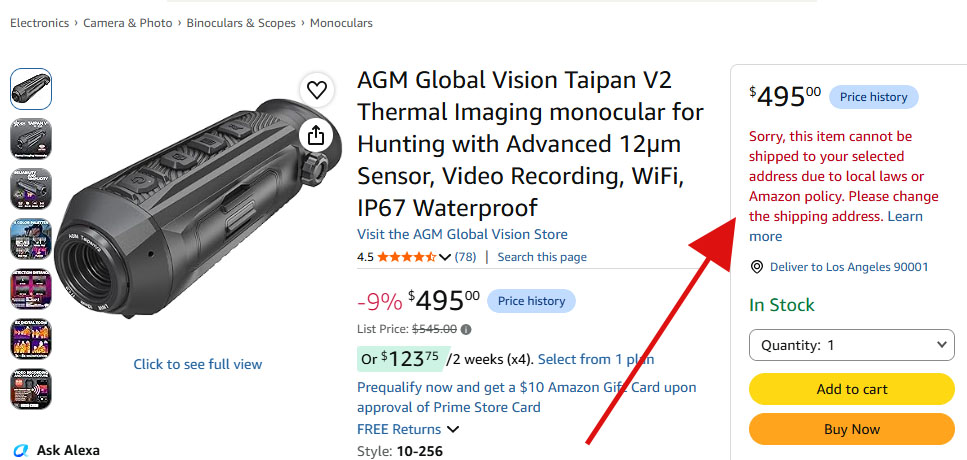
If a product page shows a shipping restriction in the description, stating that the item cannot be shipped to your specific state or location due to legal reasons, you need to carefully evaluate the situation before making a decision.
In some cases, even if a product has a strong “Bought in Past Month” sales ratio, you may still consider it if the overall demand is high. This is because different states in the United States have different laws and regulations, so a restriction in one area does not necessarily mean the product is restricted everywhere.
Trick–12. Unclear Feature Information
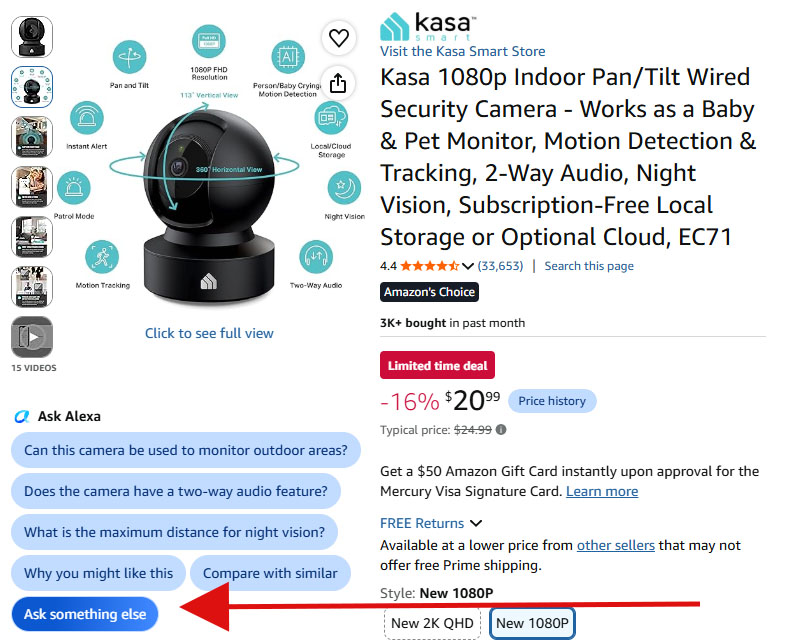
There are certain keywords that represent important product features. In many cases, the product feature description on Amazon may be inaccurate, incomplete, or unclear, which can make product evaluation difficult.
In such situations, you should verify the information more carefully by directly asking Amazon AI. If you still cannot find clear or reliable answers there, the next step is to carefully analyze customer reviews, as they often provide real-world insights about the product’s actual performance and features.
Trick–13. Product Selection Strategy for Price/Under $ Based Keyword
When selecting products for price-specific keywords, it’s important not only to match the product price range closely with the keyword intent but also to ensure the product remains consistently available at that price over the long term. This helps maintain strong long-term relevance within that price range, increases conversion potential, and reduces the need to frequently update top 10 product lists.
Here is a basic concept for choosing products based on an under-price range or budget-focused keywords.
For “best digital camera under $100,” you should select products in the $50 to $80 range.
For “best digital camera under $200,” choose products in the $80 to $170 range.
For “best digital camera under $250,” select products in the $150 to $210 range.
For “best digital camera under $300,” focus on the $180 to $240 range.
For “best digital camera under $400,” select products in the $250 to $340 range.
Staying within these adjusted ranges helps you avoid extremely low or high outliers and keeps your product selection aligned with real buyer expectations. Product prices fluctuate constantly and tend to increase over the long term, so it’s wise to select a product priced slightly below your maximum target budget.
Important Note on Discount Pricing: When selecting products, you may often see heavily discounted prices displayed for certain items. However, these discount prices are usually temporary and may return to the original or higher price after a short period of time. Because of this, you should be careful when evaluating products that are currently showing discounted pricing or undergoing price reductions.
Irrelevant Products for Long-Tail Keywords
Best Non-Toxic Non-Stick Dishwasher-Safe Cookware
Here is a long-tail keyword with a search volume of 50. Although the search volume is relatively low, it is a highly profitable, high-intent money keyword. For this type of keyword, the chance of generating a sale can be significantly higher than with a broader keyword. While a general keyword may have a conversion potential of around 10 to 20%, a highly specific long-tail keyword like this can potentially reach 80% when the search intent and product match are strong.
That is why we should give these types of long-tail keywords serious attention when building our content strategy and make every effort to capture their commercial value.
Notice that this keyword contains three important product features:
- Non-toxic
- Non-stick
- Dishwasher-safe
Fact-1
For example, let’s assume Amazon has several products that do not include all three of these features. Some products may be non-toxic and dishwasher-safe but not non-stick.
In that situation, even if an important product feature is missing or the product does not fully match the long-tail keyword, you should still try to complete the money article with 5+ products that are 50 to 80% relevant and match the other key features as closely as possible.
Fact-2
Now, suppose you find only three products that match the keyword requirements 100%. In that case, you can include another three to five products that do not fully match the keyword but are still closely related to the search intent, and use them to complete the money article.
Fact-3
Even if a product matches only one of the three features while missing the other two, you can still consider including it if necessary. The goal is to complete the article with around five products that provide the closest possible match to the keyword and its search intent.
Best Smart: As marketers, we always need to think strategically. Amazon may not always have products that match a keyword 100%, but if you find products that match around 50 to 80% of the keyword requirements and still satisfy the core search intent, you should consider using them to complete the money article.
The key point is to make every reasonable effort to avoid missing a high-potential keyword simply because Amazon does not have enough products that meet every single requirement. Prioritize the strongest product matches first, then use closely related products to fill the remaining spots when necessary.
Things to Avoid in Product Research
Tool Usage: You should avoid relying on any automated tools or AI systems for product research. These tools are not yet accurate enough and, in many cases, cannot provide results even 20% close to manual research quality.